
Rotator Cuff Injuries & Tendinopathy
Been told you have a rotator cuff injury? Great. But which part?
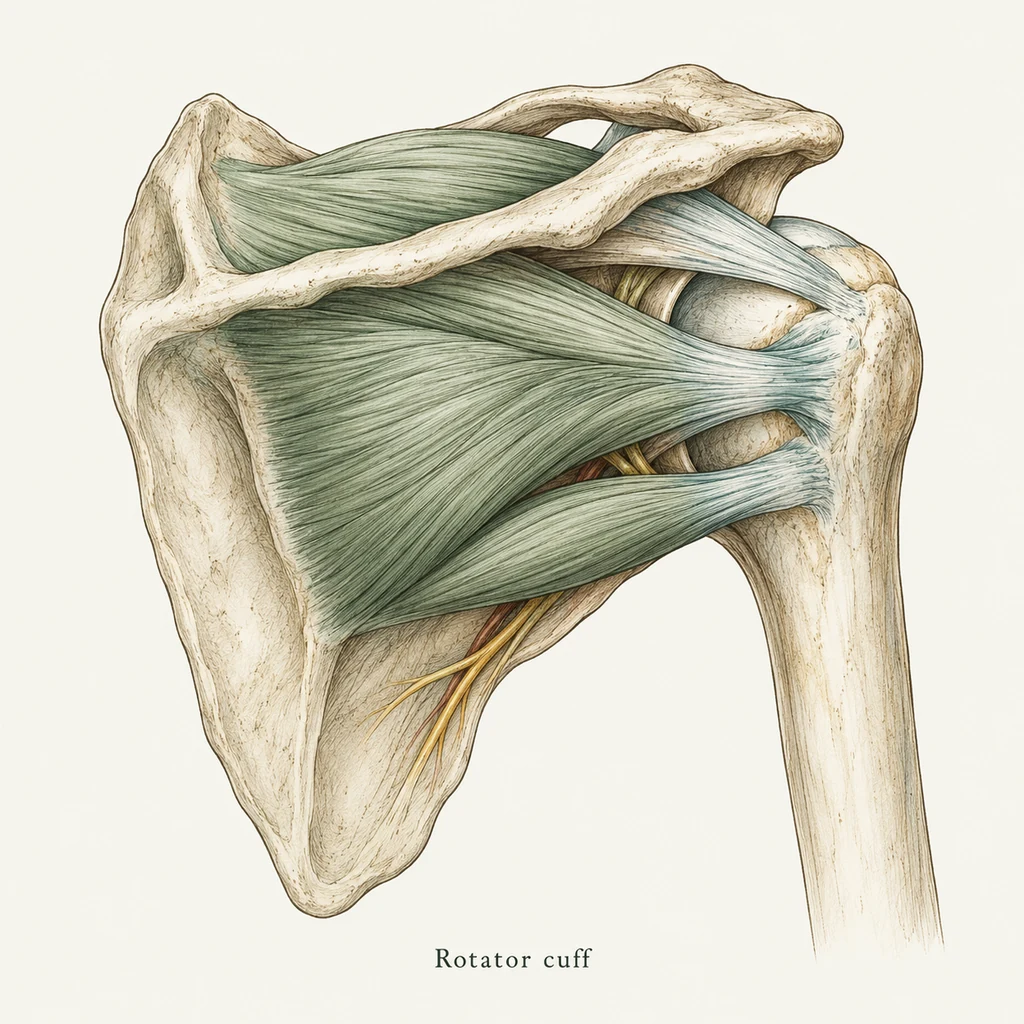
What is it?
The rotator cuff consists of four muscles and their tendons that help control and stabilize the shoulder. Problems range from load-related tendinopathy and bursitis-associated pain to partial- or full-thickness tendon tears.
What causes it?
Symptoms may follow repetitive overhead loading, a sudden fall or lift, age-related tendon changes, or a change in training volume. Pain can also arise from other shoulder structures.
How do we distinguish it from other conditions?
A “rotator cuff injury” is not a complete diagnosis. We consider labral injuries, AC joint problems, calcific tendinopathy, biceps tendon disorders, frozen shoulder and cervical referral. Diagnostic ultrasound or MRI may help when a specific structural injury needs clarification.
How is it treated?
Physiotherapy and chiropractic care emphasize progressive rotator cuff and scapular strengthening, graded return to overhead activity, joint mobility and load management. RMT provides targeted relief for associated shoulder and upper-back muscular pain; osteopathic manual therapy addresses comfortable shoulder and thoracic movement; acupuncture can support pain management. Pectoralis major/minor mobility, thoracic mobility and postural endurance are assessed when relevant. IASTM, taping and Class 4 laser may be selected as supportive options. Radial shockwave may be considered for calcific tendinopathy; injections such as PRP require individualized medical discussion because evidence varies.
When should you seek treatment?
Seek assessment for persistent pain, night discomfort or weakness. Sudden inability to lift the arm after trauma, major deformity or new neurological symptoms require prompt evaluation.
Related conditions: Frozen Shoulder (Adhesive Capsulitis) · Shoulder Impingement (Subacromial Pain Syndrome)
Feel better. Together.