
Frozen Shoulder (Adhesive Capsulitis)
When your shoulder seems to have decided it is no longer taking requests.
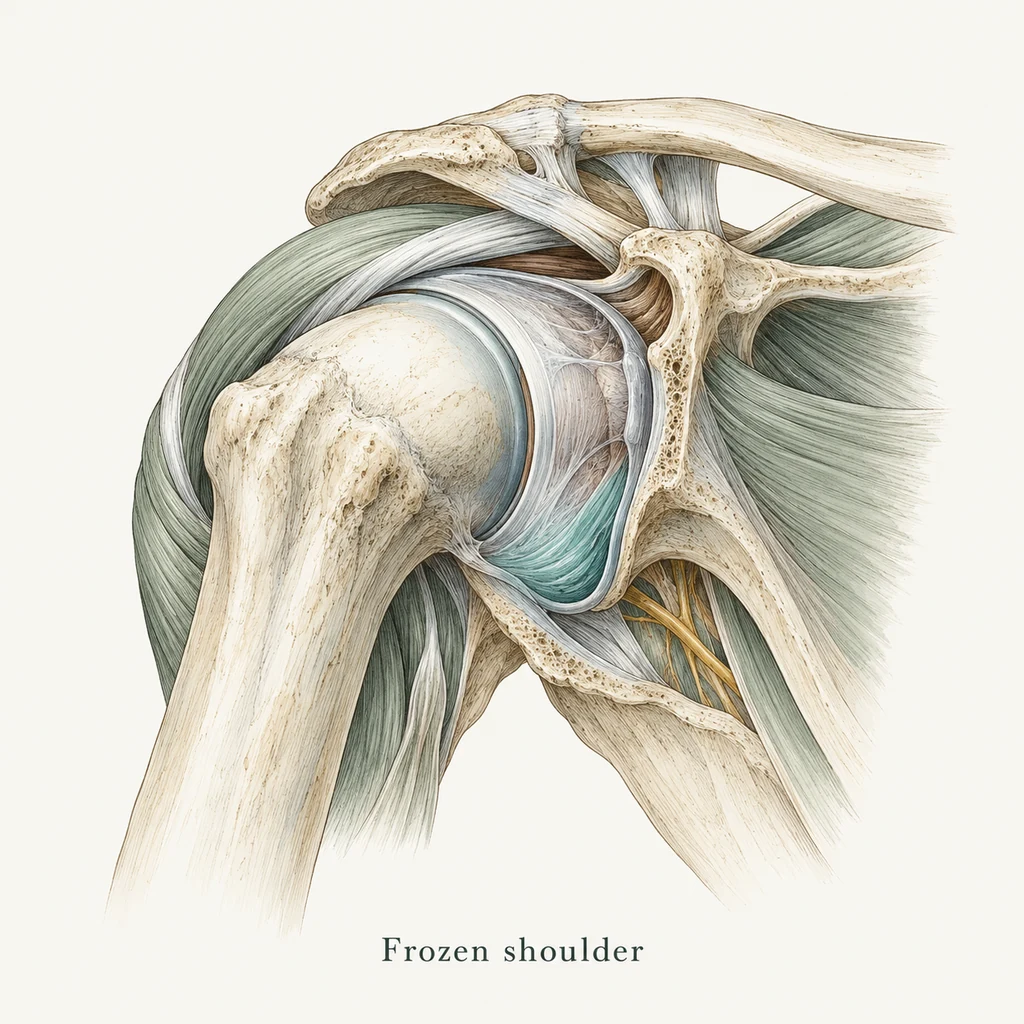
What is it?
Frozen shoulder causes progressive pain and marked loss of both active and passive shoulder movement as the joint capsule becomes stiff. It is more common in middle age, particularly in women, and is associated with diabetes and thyroid disorders.
What causes it?
It may arise without a clear trigger or after injury, surgery or immobilization. Symptoms often progress through painful and stiff phases, but individual courses vary.
How do we distinguish it from other conditions?
We distinguish it from rotator cuff tears, arthritis and cervical referral. Although many people improve over one to three years, some retain long-term motion limitations; waiting alone does not guarantee full recovery.
How is it treated?
Stage-appropriate physiotherapy and chiropractic care focus on tolerable mobility, pain control and gradual restoration of strength and function; aggressive painful stretching can worsen symptoms. RMT and osteopathic manual therapy can address secondary muscular discomfort and movement restrictions. Acupuncture may help with pain management. Class 4 laser can be considered for associated pain with evidence caveats. Medical options such as corticosteroid injection or hydrodilatation may be discussed through qualified providers when appropriate. Post-procedure rehabilitation can support recovery.
When should you seek treatment?
Seek assessment when shoulder pain is accompanied by progressive stiffness or dressing and reaching become difficult. Fever, significant trauma or acute neurological symptoms warrant medical review.
Feel better. Together.