
Whiplash-Associated Disorders
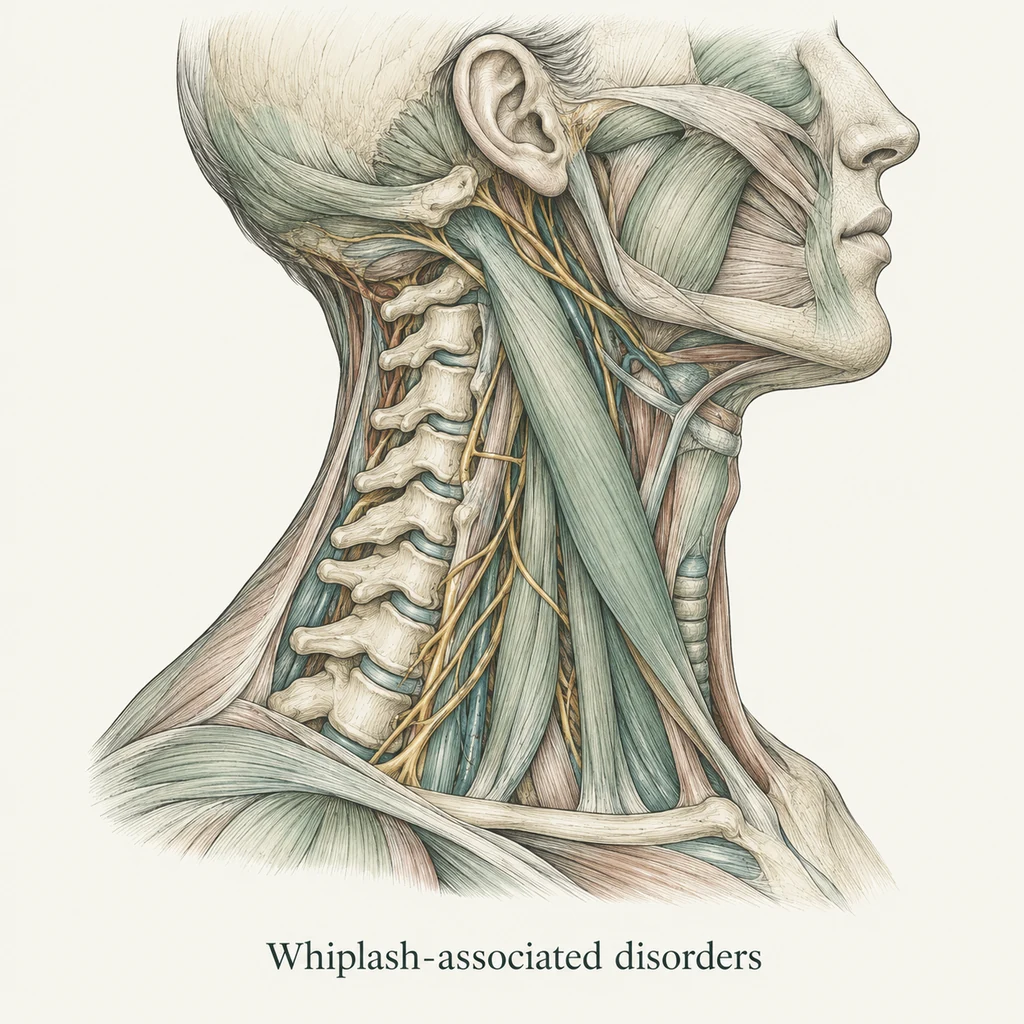
What is whiplash-associated disorders?
Whiplash describes symptoms after a rapid acceleration-deceleration movement of the head and neck, often during a vehicle collision. Neck pain, stiffness, headaches, dizziness, shoulder discomfort and concentration difficulties can develop immediately or over the next several days.
What causes whiplash-associated disorders?
Rear-end or other collisions, sports impacts, falls and sudden jolts can irritate or injure cervical muscles, joints, ligaments and other structures. Symptoms do not necessarily correspond to visible vehicle damage.
How is whiplash-associated disorders treated?
At Alliance Wellness Clinic in Vancouver, treatment is based on your assessment, symptoms and goals. Options include:
Chiropractic Care: Gentle mobilization, selected adjustments when safe, soft tissue therapy, taping and rehabilitation tailored to the injury.
Physiotherapy: Progressive neck and upper-back strengthening, mobility, movement retraining and IMS/dry needling for appropriate muscular symptoms.
Registered Massage Therapy: Hands-on treatment to address muscle tension, discomfort and stiffness.
Osteopathic Manual Therapy: Gentle techniques for surrounding mobility and muscular symptoms.
Acupuncture: Supports pain management and associated muscle tension.
Class 4 Laser Therapy: An optional adjunct for selected soft tissue symptoms.
Dizziness and Vestibular Assessment: Dizziness after an injury has several possible causes. For confirmed benign paroxysmal positional vertigo (BPPV), all Alliance chiropractors and physiotherapists offer the Epley manoeuvre when appropriate. BPPV is distinct from concussion-related or other dizziness.
ICBC Injury Care: Alliance welcomes patients after motor vehicle collisions and offers help with care coordination and direct billing for eligible ICBC-covered services, subject to current rules.
When should you seek treatment?
Book an assessment for neck pain, headaches, dizziness or reduced function after an accident. Significant trauma, worsening severe headache, confusion, repeated vomiting, fainting, new weakness or difficulty walking requires urgent medical attention.
Feel better. Together.