
BPPV & Positional Vertigo
The room spins when you roll over in bed? Your inner ear may be sending mixed signals.
What is it?
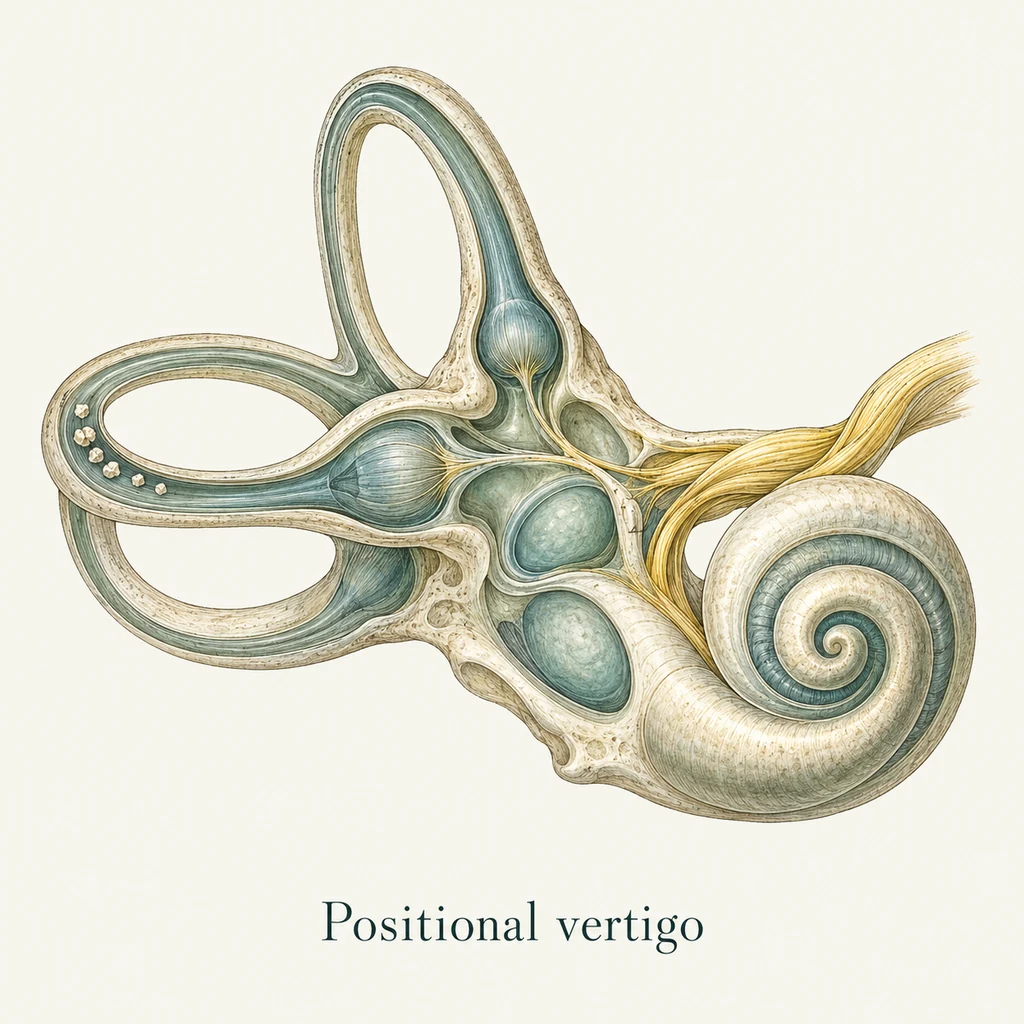
Benign paroxysmal positional vertigo (BPPV) causes brief episodes of spinning triggered by changes in head position. Tiny calcium carbonate particles (otoconia) move into an inner-ear semicircular canal, disturbing its motion sensors. Episodes usually last seconds to under a minute, although nausea and lingering unsteadiness may follow.
What causes it?
BPPV may occur without an obvious trigger, or follow head trauma, an inner-ear illness, or prolonged inactivity. It becomes more common with age.
How do we distinguish it from other conditions?
Not every dizzy spell is BPPV. Vestibular migraine, medication effects, blood-pressure changes, other inner-ear disorders and neurological problems can produce dizziness. We assess the symptom pattern and use positional tests, such as Dix–Hallpike or supine roll testing, when appropriate.
How is it treated?
Our chiropractors and physiotherapists perform the Epley manoeuvre for appropriately diagnosed posterior-canal BPPV; other canal-specific repositioning manoeuvres are used or referred for as indicated. Vestibular exercises, balance rehabilitation and fall-prevention advice can help when symptoms linger. Massage, osteopathic manual therapy and acupuncture may support associated neck discomfort, muscle tension or nausea but do not replace particle-repositioning treatment.
When should you seek treatment?
Book an assessment for brief spinning with rolling in bed, looking up or bending. Seek urgent medical attention for new dizziness with severe headache, double vision, difficulty speaking, inability to walk, new weakness or numbness, or other stroke-like symptoms.
Feel better. Together.