
Trigger Finger & Trigger Thumb
Despite the name, trigger finger was not named for people who pull triggers. It describes the finger catching and suddenly releasing—like a trigger mechanism.
What is it?
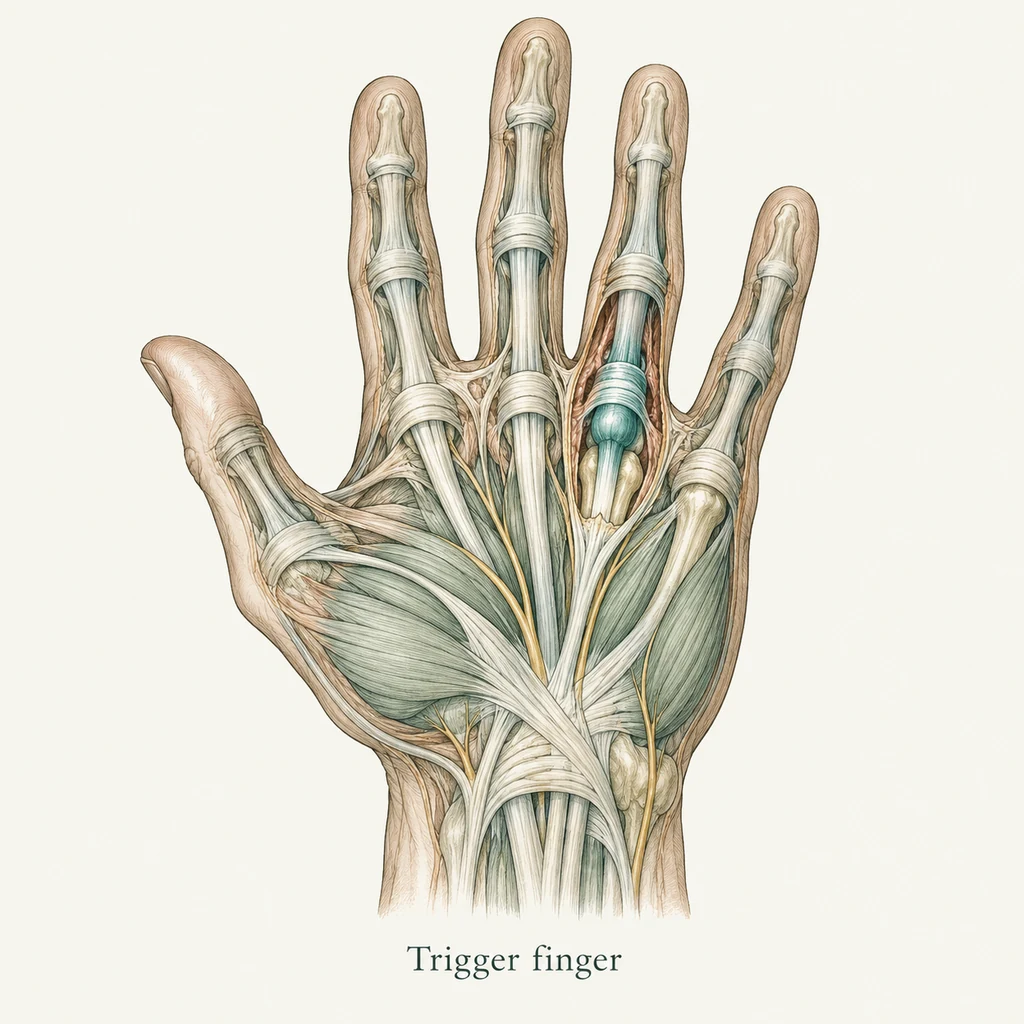
Trigger finger (stenosing tenosynovitis) occurs when a flexor tendon catches at a thickened pulley, usually the A1 pulley near the base of a finger or thumb. Clicking, locking and morning stiffness are common.
What causes it?
It may occur without a clear cause; diabetes, inflammatory arthritis and repetitive forceful gripping are associated factors.
How do we distinguish it from other conditions?
Dupuytren’s contracture causes progressive fixed bending from thickened palmar fascia rather than tendon catching. Joint arthritis and tendon injury can also mimic symptoms.
How is it treated?
Hand rehabilitation may include gentle tendon gliding, activity changes and appropriate splinting. Chiropractic and physiotherapy can guide hand/wrist movement and function. RMT addresses accompanying forearm and hand muscular discomfort; osteopathic manual therapy can support comfortable mobility; acupuncture may help pain management. IASTM and Class 4 laser have limited evidence for the actual mechanical catching and should not be presented as pulley-release treatments. Corticosteroid injection is established medical care; persistent cases may need A1 pulley release. Postoperative rehabilitation can address stiffness, scar sensitivity and grip when needed.
When should you seek treatment?
Seek assessment for recurrent catching, pain or locking. A finger fixed in position, inability to actively move it, or signs of infection require prompt medical attention.
Feel better. Together.