
Temporomandibular Disorders (TMD) & Jaw Pain
TMJ is the joint. TMD is the problem. Your jaw deserves a more specific diagnosis than “you have TMJ.”
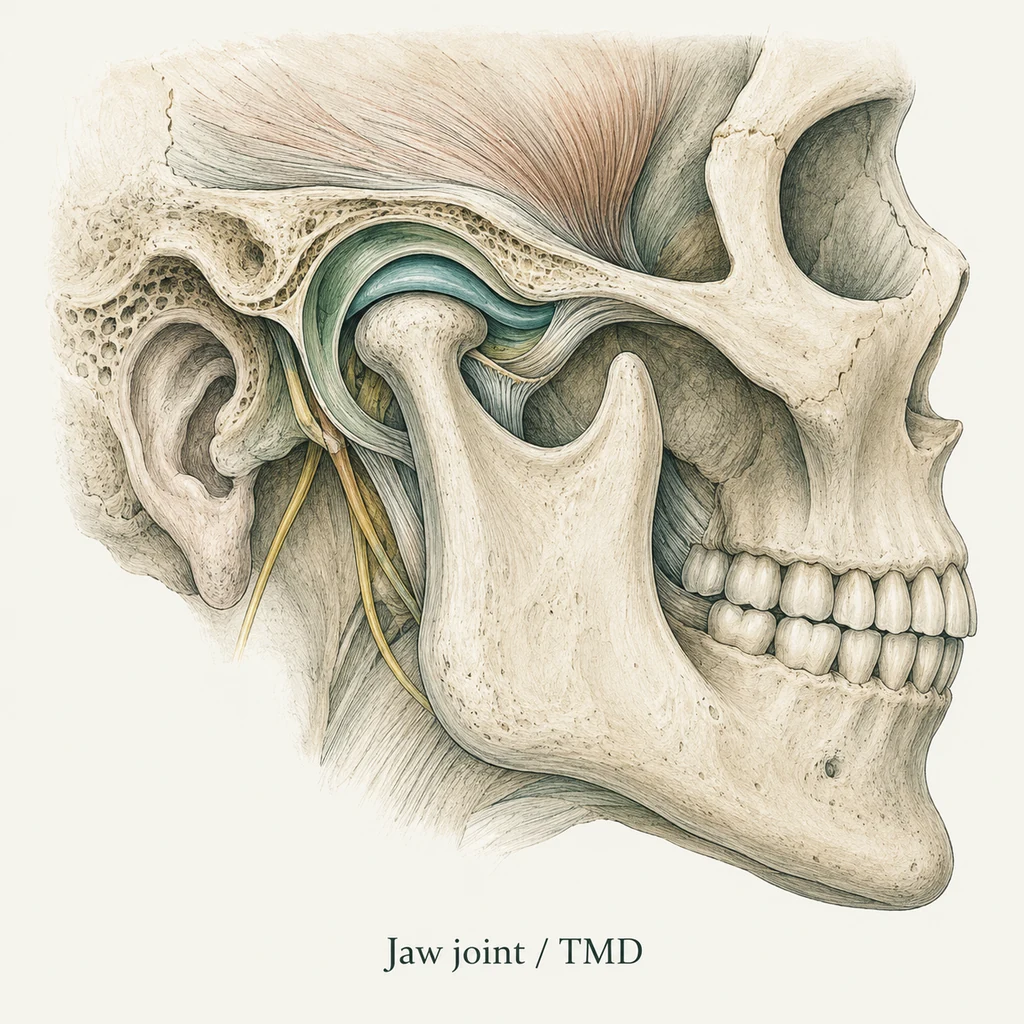
What is it?
The temporomandibular joints (TMJs) connect the jaw to the skull. Temporomandibular disorders (TMD) include problems affecting the jaw muscles, joints and related tissues, causing pain, restricted opening, clicking or locking. A painless click alone is often not a disorder requiring treatment.
What causes it?
Contributors can include jaw muscle overuse, clenching, injury, sleep disruption, stress and some joint conditions. Bruxism can coexist with TMD, but its causes are complex.
How do we distinguish it from other conditions?
We assess jaw opening, muscle tenderness, joint symptoms, neck function and headache patterns. Dental evaluation is important for bite, tooth or oral concerns; persistent locking or structural joint problems may require specialist assessment.
How is it treated?
Physiotherapy and chiropractic care can provide jaw-specific exercises, gentle mobilization, cervical rehabilitation and habit modification. RMT may address jaw, temple, neck and shoulder muscle tension; osteopathic manual therapy may support associated mobility restrictions. Acupuncture can help manage pain in selected TMD presentations. We coordinate with dentists regarding night guards or other dental management when indicated.
When should you seek treatment?
Seek care for persistent jaw pain, painful clicking, limited opening, headaches linked to jaw use or recurrent locking. Sudden inability to close the mouth, trauma, significant swelling or signs of infection require prompt medical or dental assessment.
Feel better. Together.