
Thoracic Outlet Syndrome (TOS)
Arms overhead, fingers tingling? The source might be closer to your shoulder than your hand.
What is it?
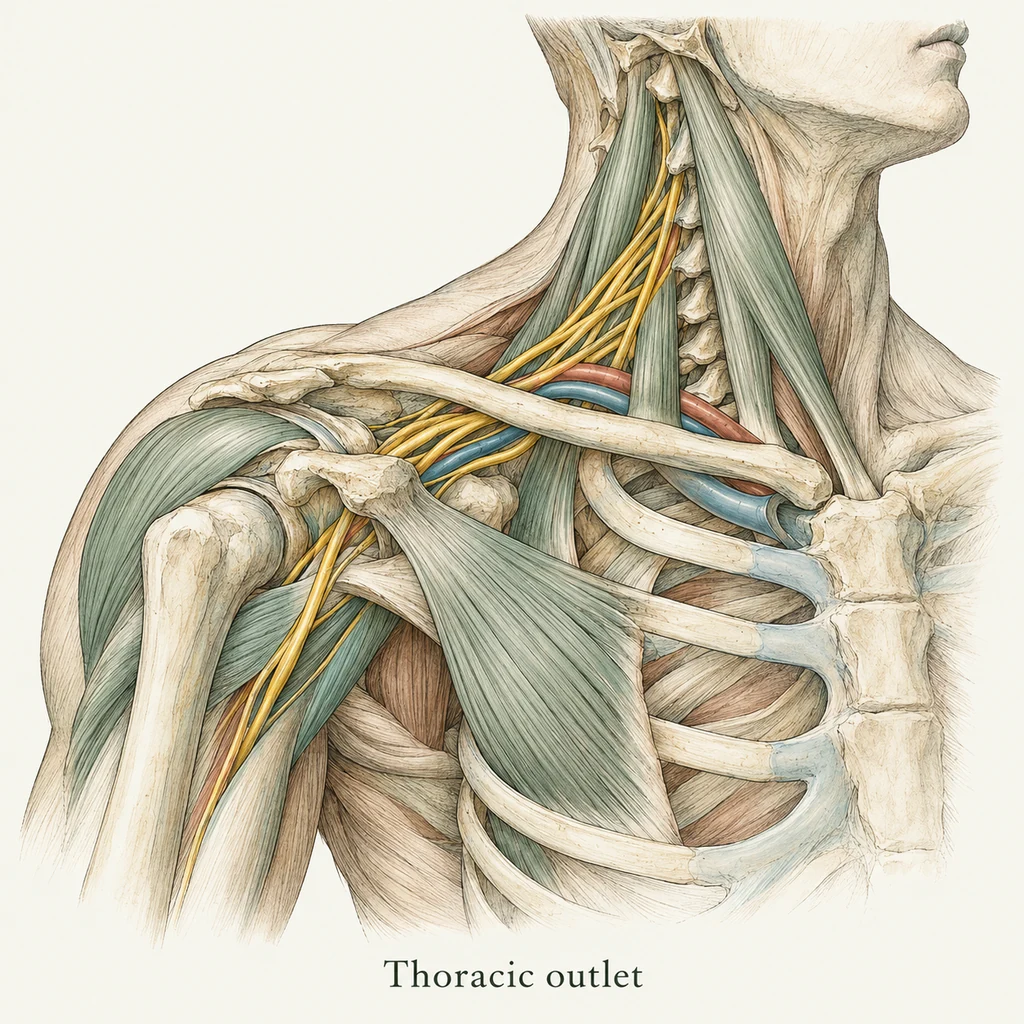
Thoracic outlet syndrome describes compression or irritation of nerves or blood vessels around the lower neck and upper chest. Neurogenic TOS affects the brachial plexus; venous and arterial TOS affect blood flow and need medical assessment.
What causes it?
Anatomical variations, injury and repetitive overhead demands may contribute. Hairstylists, bartenders, electricians, painters and other overhead workers may experience provoked symptoms.
How do we distinguish it from other conditions?
Pectoralis minor syndrome involves brachial plexus irritation beneath the pec minor and can overlap with neurogenic TOS. We assess cervical radiculopathy, carpal/cubital tunnel and systemic neuropathies, including diabetes and B12 deficiency. EMG/nerve conduction studies may help exclude other entrapments, but normal results do not rule out neurogenic TOS. Imaging and vascular testing are considered through medical referral when appropriate.
How is it treated?
We routinely assess pectoralis major/minor tension, thoracic mobility, scapular mechanics and postural endurance. Physiotherapy and chiropractic care combine serratus anterior and middle/lower trapezius strengthening, rotator cuff conditioning, graded overhead exposure and ergonomic modifications. Nerve-focused soft tissue mobilization and active movement-based techniques can address relevant muscular restrictions without aggressive pressure over neurovascular structures. RMT and osteopathic manual therapy support chest, neck and shoulder comfort and mobility; acupuncture can help associated pain. Class 4 laser is an optional symptom-focused modality with limited TOS-specific evidence. There is no single ideal posture and not all TOS responds to manual therapy.
When should you seek treatment?
Seek assessment for recurrent arm symptoms with overhead work. Sudden arm swelling, blue/pale/cold fingers, marked circulation changes or rapid weakness require urgent medical evaluation.
Feel better. Together.