
Scoliosis
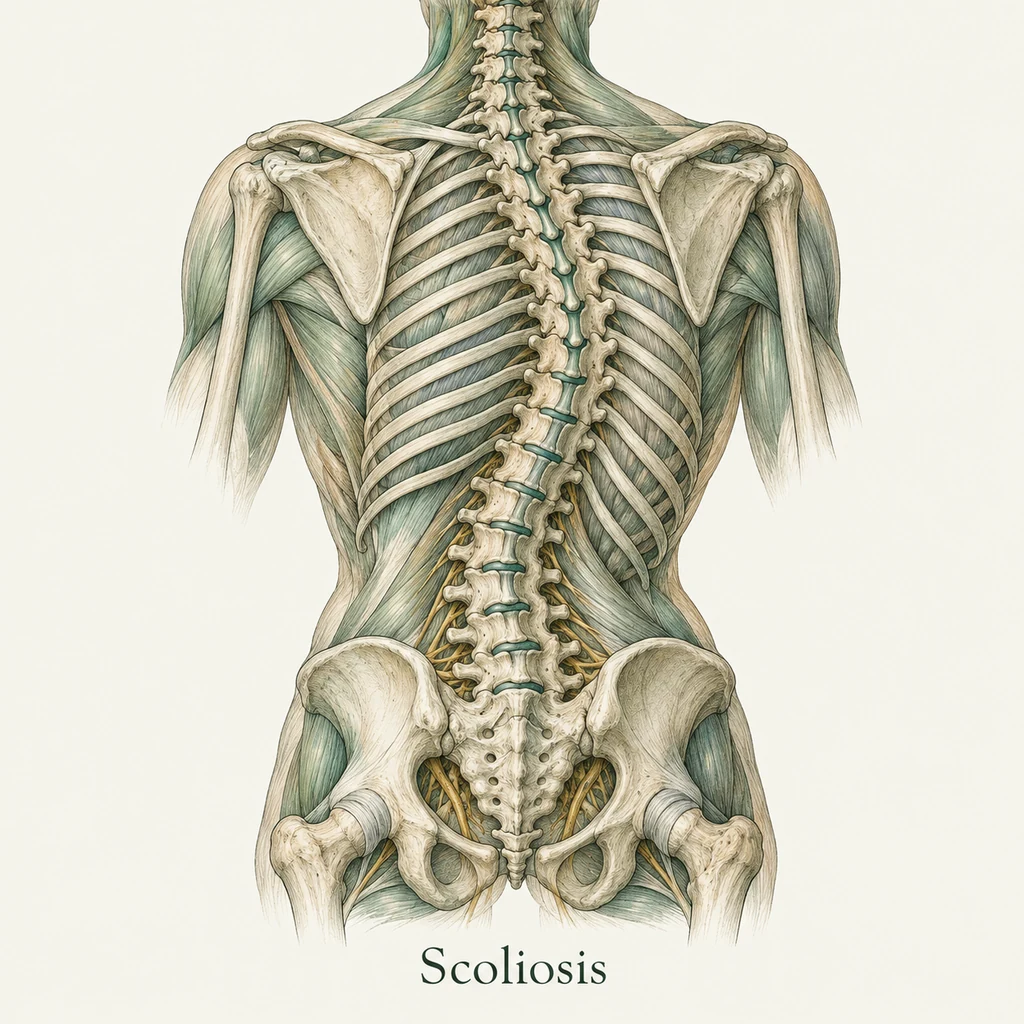
What is scoliosis?
Scoliosis is a three-dimensional curvature of the spine that can also involve vertebral rotation. One shoulder, hip or side of the rib cage may look more prominent. Some people have no pain; others notice fatigue, stiffness or muscular discomfort.
What causes scoliosis?
Adolescent idiopathic scoliosis has no single known cause, although genetics contributes. Other forms include adult degenerative, congenital and neuromuscular scoliosis. Flexible postural asymmetry is different from structural scoliosis.
How is scoliosis treated?
At Alliance Wellness Clinic in Vancouver, treatment is based on your assessment, symptoms and goals. Options include:
Chiropractic Care: Individualized mobilization, soft tissue therapy and exercises for comfort and function, without claiming to straighten a structural curve.
Physiotherapy: Strengthening, postural control, mobility, breathing work and scoliosis-specific exercises when the clinician has appropriate training.
Osteopathic Manual Therapy: Gentle hands-on treatment for associated movement restrictions and muscular discomfort.
Registered Massage Therapy: Addresses muscle tension and areas of muscular overuse.
Acupuncture: Supports pain management and associated muscle tension.
Class 4 Laser Therapy: An optional adjunct for selected associated musculoskeletal pain; it does not correct the curvature.
Monitoring and Referral: Children and teens may need imaging, monitoring or specialist referral. Bracing or surgery is appropriate for some progressive curves.
When should you seek treatment?
Newly noticed spinal asymmetry in a child or teen warrants timely assessment, even without pain. Adults should seek assessment for rapidly changing curves, progressive neurological symptoms or unexplained severe pain.
Feel better. Together.