
Migraines
A migraine is not just a really bad headache—and you should not have to plan your life around the next one.
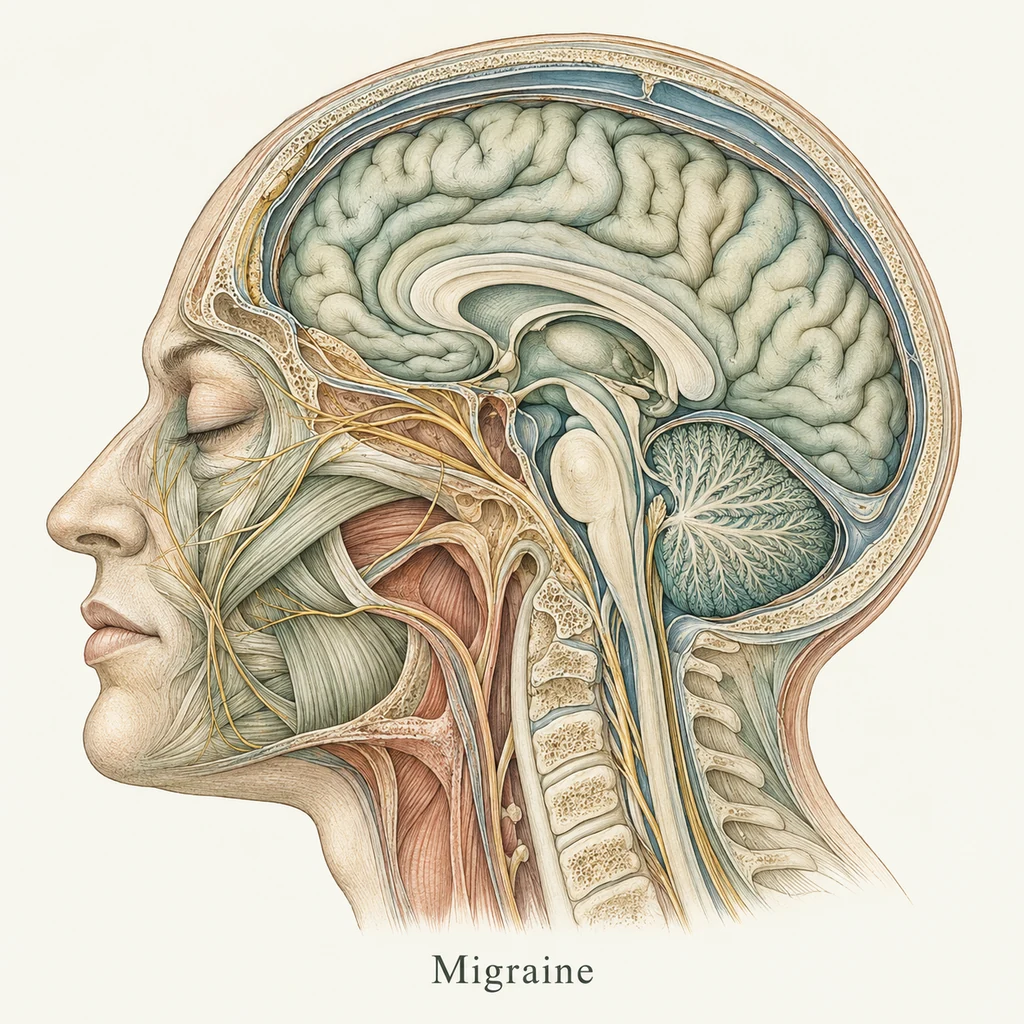
What is it?
Migraine is a neurological disorder with recurrent attacks that may involve throbbing or pulsating head pain, nausea, light and sound sensitivity, and sometimes aura. Some people experience migraine with little or no head pain.
What causes it?
Migraine involves a genetically influenced, sensitive nervous system. Attacks can be associated with disrupted sleep, hormonal fluctuations, missed meals, stress changes, alcohol and other individual triggers; not every suspected trigger is causal.
How do we distinguish it from other conditions?
We review attack frequency, aura, medications, neck and jaw symptoms and possible medication-overuse headache. Diagnosis and preventive or acute medications are coordinated with a physician or other qualified prescriber.
How is it treated?
Acupuncture may help reduce migraine frequency for some people and can be integrated with medical care. Physiotherapy and chiropractic care can address coexisting neck dysfunction, exercise tolerance and ergonomic contributors, but spinal treatment is not a cure for migraine. RMT and osteopathic manual therapy can support associated muscular discomfort; clinical counselling and stress-management strategies may help patients manage the impact of recurrent attacks. We can help patients track patterns and communicate findings to their medical team.
When should you seek treatment?
Book an assessment for recurrent disabling headaches. New neurological deficits, a sudden worst-ever headache, new headache during pregnancy/postpartum, or a marked change in symptoms warrants urgent medical evaluation.
Related conditions: Tension-Type Headaches · Cervicogenic Headaches · Occipital Neuralgia
Feel better. Together.