
Carpal Tunnel Syndrome
Waking up shaking your hands? Not every numb finger means carpal tunnel.
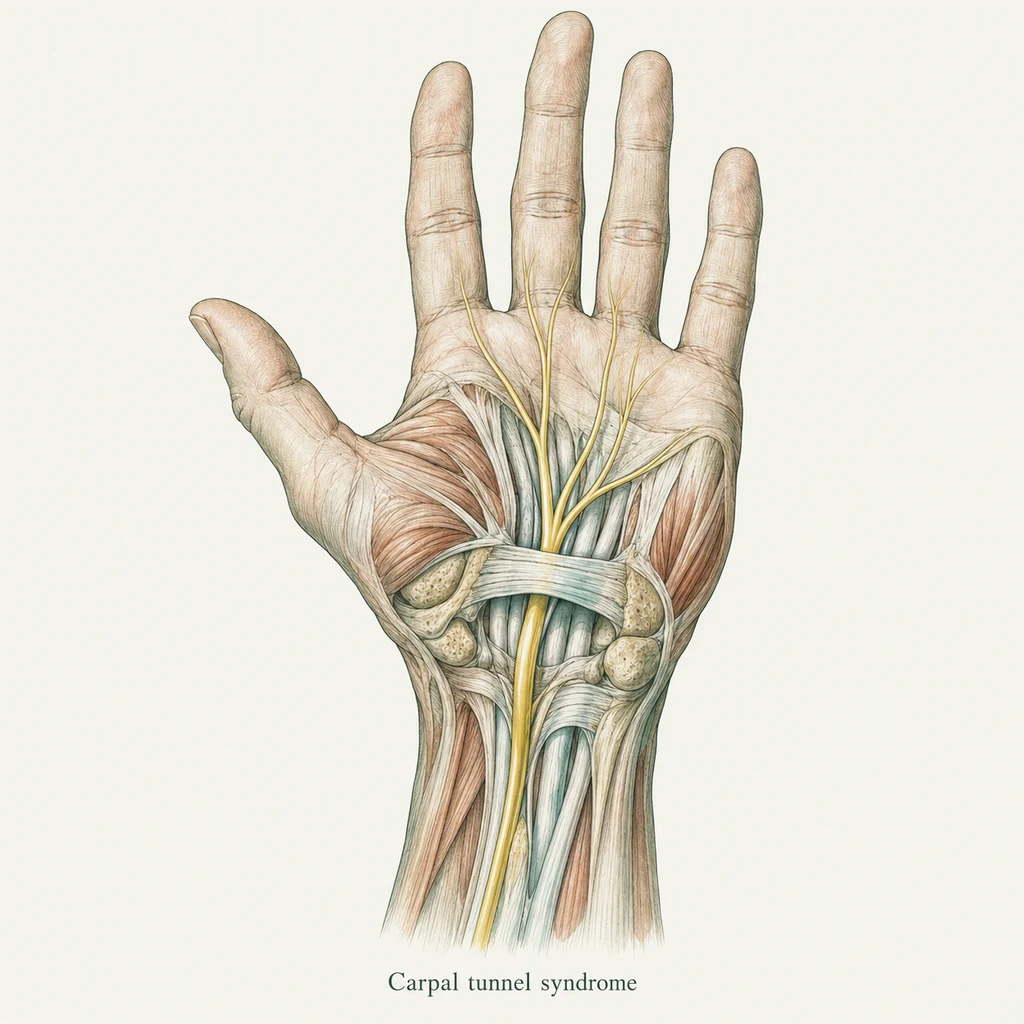
What is it?
Carpal tunnel syndrome is compression of the median nerve at the wrist, commonly causing numbness or tingling in the thumb, index, middle and thumb-side ring finger, especially at night. Advanced cases may cause thumb weakness or muscle wasting.
What causes it?
Factors include pregnancy-related swelling, diabetes, thyroid disorders, inflammatory disease, sustained wrist positions and repetitive forceful hand work; sometimes there is no clear cause.
How do we distinguish it from other conditions?
We assess the entire nerve pathway: cervical radiculopathy, thoracic outlet/pectoralis minor syndrome, pronator syndrome and other entrapments can mimic symptoms. We also consider B12 deficiency, diabetes/prediabetes, thyroid disorders, medications and serious neurological causes. We frequently recommend medical evaluation for bloodwork, EMG and nerve conduction studies; these can help localize and grade dysfunction but are not infallible.
How is it treated?
Nighttime neutral wrist splinting, activity modification and targeted hand rehabilitation are common first steps. Physiotherapy and chiropractic care may use median nerve glides, strengthening, ergonomic changes and nerve-focused soft tissue mobilization, including active movement-based techniques for surrounding tissues. RMT and osteopathic manual therapy can address associated forearm, shoulder and neck restrictions; acupuncture can support symptom management. Class 4 laser may be considered selectively with mixed evidence. Medical corticosteroid injection or surgical release may be appropriate. After surgery, rehabilitation can address scar sensitivity, mobility, grip strength and functional return, following surgeon precautions; not everyone requires extensive supervised care.
When should you seek treatment?
Seek care for recurring nighttime tingling or functional changes. Persistent numbness, thumb muscle wasting or progressive weakness needs prompt medical assessment; sudden stroke-like symptoms require emergency care.
Feel better. Together.